
Our process
How a project moves from brief to launch
Five stages, each with a defined handover. You always know which stage the work sits in, who is doing what, and what decision is waiting on you before the next stage opens.
The five stages of an engagement
The web design process runs in the same order on every project, whether it is a marketing site, a booking flow or a storefront. The sequence exists so that design decisions are made on evidence and development work is not started on an assumption. Each stage below names what happens, what we need from you, and what you receive at the end of it.
- Stage one Discovery and goal setting Weeks 1–2
- Stage two Strategy, structure and messaging Weeks 2–3
- Stage three Design and prototyping Weeks 3–5
- Stage four Build, content and quality checks Weeks 5–8
- Stage five Launch, measurement and ongoing work Week 8 onward
Weeks shown are a typical range for a mid-sized marketing site with a defined page count. A single landing page moves faster; a multi-language platform with integrations takes longer. We confirm the schedule in writing before stage one begins, and we tell you early if something is likely to move it.
Where every project starts
Discovery and strategy come before pixels
Stage one is a working session, not a sales call. We ask what the business needs the site to do, who it needs to reach, and how success will be judged three months after launch. That conversation sets the targets the rest of the project is measured against, which is why we do not quote a fixed scope before it happens.
You leave discovery with a written summary: the audience, the primary conversion, the pages that must exist, and the content you already have versus the content someone needs to write. If a competitor comparison or a keyword picture would change a decision, we prepare it here rather than after design is signed off.
Stage two turns that summary into structure. We map the page hierarchy, write the messaging hierarchy for each template, and agree which pages carry the marketing weight. This is also where the digital marketing workflow joins the web build: tracking requirements, form destinations and the reporting you will actually read get specified now, not bolted on after launch.
What we need from you: one decision-maker who can approve direction, access to any existing analytics, and a realistic view of who will supply copy and imagery. Projects stall most often at content, so naming the writer early is the single most useful thing you can do.
What discovery covers
-
Business goal in one sentence
What the site must change — enquiries, bookings, applications, or something else entirely.
-
Audience and priority markets
Who reads the page first, in which language, and on which device they are most likely to arrive.
-
Content you already hold
Existing copy, photography, price lists and legal pages, sorted into usable and needs-work piles.
-
How we will measure it
The handful of numbers worth watching, and where the tracking has to sit to record them.
Bring whatever you have — a brief, a competitor list, or nothing but a problem. The first conversation is free and carries no obligation.
Design, then build, with nothing hidden in between
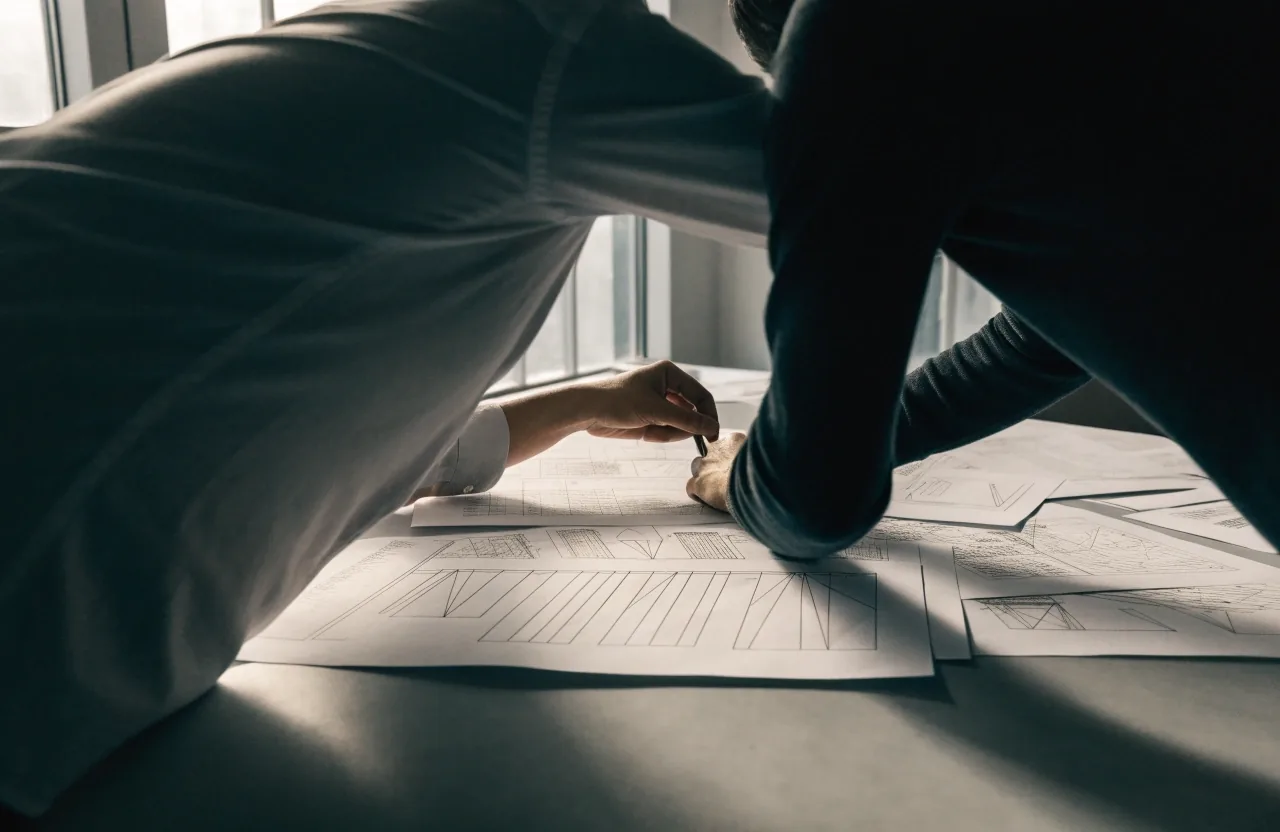
Stage three starts with wireframes — plain structure, no styling — so layout and content order can be argued about before anything is polished. Once the structure holds, we design the key templates: home, a service or product page, a listing, and a form. You review those in the browser, not as static images, so spacing and behaviour are judged the way visitors will meet them.
Two rounds of feedback are built into the schedule. Feedback that arrives as a single consolidated list from one decision-maker moves fastest; comments split across five people at different times are the main reason a design stage runs long.
Stage four is the web development methodology at work. Components are built to the approved design, content is loaded, and the site is assembled in a staging environment you can open at any time. Forms are tested with real submissions, pages are checked on phones and older browsers, and redirects from the old site are mapped before anything goes live.
Before launch we hand you a short checklist covering page speed, accessibility basics, meta titles and descriptions, and the tracking events agreed in stage two. Anything we cannot verify ourselves is flagged as your responsibility rather than quietly marked done.
What you receive at the end of each stage
- Discovery summary Goals, audience, page list
- Site map and messaging notes Structure, per-template copy direction
- Wireframes and template designs Desktop and mobile layouts
- Staging build and pre-launch checklist Tested pages, open items list
Launch day is a handover, not an ending
On launch we move the site to its live environment during an agreed window, verify forms and redirects one more time, and confirm that the tracking from stage two is recording. You receive the hosting and domain access details, a short guide to editing the pages you will update most often, and a named contact for anything that breaks.
Ongoing support is deliberately separate from the build. Some clients take a monthly retainer covering updates, monitoring and campaign work; others come back when they have a new page or a seasonal push. Both are fine, and neither is locked in by the original contract.
One part of this stage is not optional in our process: a measurement plan has to exist before we agree a launch date. Without it there is no way to tell whether the new site performed better than the old one, and every later decision — which page to improve, which campaign to fund — becomes guesswork. It is the one control we will not arm quietly on your behalf.
Before we schedule a launch date
Four things have to be true. We check them with you at the end of stage four, and we do not book a launch slot while any of them is open.
- Primary conversion event is tracked Confirmed
- Forms deliver to a monitored inbox Confirmed
- Redirects from the old site are mapped Confirmed
- Someone owns post-launch content updates Awaiting your answer
This is the one step in the process we ask to be settled in writing. It usually takes a single call and a short follow-up note.
Questions that come up before a project starts
If your question is not here, the frequently asked questions page covers pricing, hosting and support in more detail.
How long does a typical project take from first call to launch?
Most marketing sites with a defined page count run around eight weeks, with discovery and strategy taking the first two. Stores, booking systems and sites that need integrations take longer because there is more to test. The schedule is confirmed in writing before stage one, and content delays are the most common reason it moves.
Who writes the copy and who supplies the photography?
Either of us can. Many clients write their own service copy and we edit it for structure and search visibility; others ask us to write from scratch after discovery. Photography follows the same rule. What matters is that the decision is made in stage two, because content is the part of the process that most often holds up the build.
How many rounds of changes are included in the design stage?
Two consolidated rounds per template. A round means one list of comments from one decision-maker, not a series of separate messages. Further rounds are possible and are quoted separately, which keeps the original scope and the original schedule honest for both sides.
What happens to the site after launch?
You own the site and its access details. We can stay on for monthly updates, monitoring and campaign work, or step away entirely and return when you have a new page or a seasonal push. Support is not tied to the build contract, so you are not committing to a retainer to keep the site running.
Do you work with businesses outside Singapore?
Yes. Most of our work is with Singapore businesses, and we run projects for clients in other markets too. Reviews happen over scheduled calls during working hours, and written feedback works just as well when time zones differ.
See the process applied to real work
The fastest way to judge whether this way of working suits you is to look at what came out of it, and then to ask us the awkward questions. Creative Studio LLC works with businesses in Singapore and beyond from our Tbilisi base, and the first conversation is free.
Questions about a project
Contact the studioWhere we are
4th microdistrict, Gldani, building 89, apartment 47, Tbilisi 0167, Georgia
Monday to Friday, 9:00 AM – 6:00 PM